

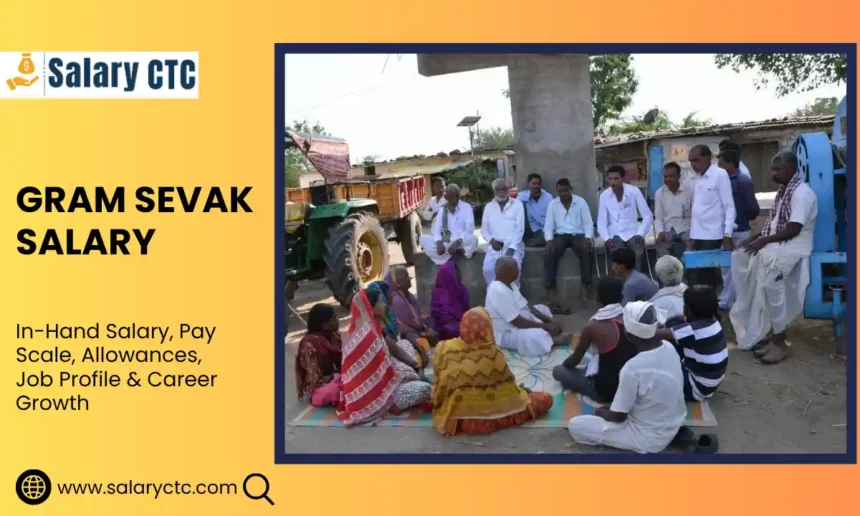
Gram Sevak is one of those individuals who work very hard towards the growth and development of rural India by acting as a mediator between the government and village administrations. The responsibility of Gram Sevak lies within Panchayati Raj and Rural Development departments, where Gram Sevaks play an instrumental part in executing government welfare programs as well as assisting in socio-economic development of villages. Around each year, numerous numbers of candidates appear for the examination conducted for recruiting Gram Sevak positions through various state governments. Apart from job security and social respect, one of the biggest attractions of this post is its stable salary and government benefits. One of the most trending questions among aspirants is:”What is the Gram Sevak salary in India?”
The answer would be dependent on the state where you are getting recruited, pay commission norms and pay band, as well as the applicable allowances. As Gram Sevak is a state government post, therefore, the salary structure varies from one state to another. Nevertheless, most states use pay matrix similar to 7th pay commission recommendation.
This detailed guide breakdown everything you need to know about the Gram Sevak Salary structure, including in-hand salary, pay scale, allowances, job profile, promotion opportunities, career growth and much more.
Who Is a Gram Sevak?
A Gram Sevak is a government official who assists in implementing rural development schemes at the village level.
His main goal is to make sure that government schemes reach their eligible candidates and help the Panchayat with their administrative and developmental activities.
Gram Sevaks work closely with:
- Gram Panchayat
- Block Development Office
- Rural Development Department
- Agriculture Department
- Social Welfare Department
- Village-level committees
Gram Sevak Salary
The monthly salary varies depending on the recruiting state government.
Average Monthly Salary: ₹25,000 – ₹45,000 per month
After including all the government allowances, the salary comes out to be in this range.
Gram Sevak Pay Scale
In many states, Gram Sevaks are placed in pay levels equivalent to:
Basic Pay: ₹19,900 – ₹35,400 per month
The specific starting basic pay varies according to the salary matrix of the state government and recruitment notification.
Gram Sevak In-Hand Salary
Including all the allowances and excluding contributions like NPS, the in-hand salary turns out to be roughly:
₹28,000 – ₹42,000 per month
Government employees posted in metropolitan or higher category cities get extra HRA allowance and some other allowances.
Gram Sevak Salary Structure

| Salary Component | Approximate Amount |
|---|---|
| Basic Pay | ₹19,900 – ₹35,400 |
| Dearness Allowance (DA) | As applicable |
| House Rent Allowance (HRA) | Based on city category |
| Transport Allowance | Applicable |
| Other State Allowances | Variable |
Gross Monthly Salary
- ₹32,000 – ₹48,000
Approximate In-Hand Salary
- ₹28,000 – ₹42,000
Gram Sevak Salary During Probation
Many state governments appoint Gram Sevaks on probation.
During this period:
- Fixed monthly remuneration may be provided.
- Some allowances may not be admissible.
- The full pay scale is given to the officials after successfully completing the probation period.
The probation period normally lasts for a year or two years, depending upon the state policies.
State-Wise Gram Sevak Salary
The salary differs from state to state.
| State | Approximate Monthly Salary |
|---|---|
| Rajasthan | ₹25,000–₹40,000 |
| Maharashtra | ₹28,000–₹42,000 |
| Uttar Pradesh | ₹25,000–₹40,000 |
| Bihar | ₹24,000–₹38,000 |
| Madhya Pradesh | ₹25,000–₹40,000 |
| Odisha | ₹26,000–₹40,000 |
| Gujarat | ₹28,000–₹45,000 |
The specific amounts vary according to the salary matrix, DA rates, and state government policies.
Allowances for Gram Sevak
In addition to the basic salary, there are many allowances which are provided by the government to a Gram Sevak.
Dearness Allowance (DA)
Given to compensate for inflation effect and adjusted from time to time.
House Rent Allowance (HRA)
Varies with the location of posting and category of city.
Transport Allowance (TA)
Awarded to assist official duties travel.
Medical Facilities
According to the guidelines issued by State Government.
Other Allowances
Some states may also provide:
- Rural allowance
- Mobile allowance
- Travel reimbursement
- Festival advance
- Uniform or office-related reimbursements (where applicable)
Additional Government Benefits
There are many benefits enjoyed by Gram Sevaks in terms of their employment.
Major Benefits
- Job security
- Annual salary increments
- Paid leave
- Medical facilities
- Pension benefits under the applicable retirement scheme
- Leave Travel Concession (where applicable)
- Training and skill development
- Promotion opportunities
This makes the value of the post even greater.
Gram Sevak Job Profile
A Gram Sevak performs varied duties related to administration and development.
Key Responsibilities
- Implement government welfare schemes
- Assist Gram Panchayat administration
- Conduct village surveys
- Maintain official records
- Prepare development reports
- Monitor sanitation programs
- Support agricultural development initiatives
- Assist in rural employment programs
- Guide villagers regarding government schemes
- Coordinate with district and block officials
This job will involve constant interaction with people as well as various government departments.
Skills Required
A good Gram Sevak should have:
- Good communication skills
- Administrative ability
- Computer knowledge
- Record-keeping skills
- Leadership qualities
- Public dealing skills
- Problem-solving ability
- Knowledge of rural development schemes
The above-mentioned skills will be useful in performing daily activities more effectively.
Promotion Opportunities
The Gram Sevaks have scope of promotions in the Rural Development and Panchayati Raj Department.
Typical Career Path
Gram Sevak → Senior Gram Sevak → Extension Officer → Block Development Officer (depending upon promotions/departmental procedure, state-wise) → Other Higher Administrative Posts
Promotions generally depend on:
- Years of service
- Performance
- Departmental examinations
- Vacancies
- State government policies
Salary After Promotion
| Position | Approximate Monthly Salary |
|---|---|
| Gram Sevak | ₹28k–₹42k |
| Senior Gram Sevak | ₹35k–₹50k |
| Extension Officer | ₹45k–₹65k |
| Block Development Officer | ₹60k–₹90k |
Higher positions have additional responsibility along with greater allowances.
Gram Sevak vs Village Development Officer (VDO) Salary
| Feature | Gram Sevak | Village Development Officer |
|---|---|---|
| Employer | State Government | State Government |
| Work Area | Village Administration | Rural Development |
| Salary | ₹28k–₹42k | ₹35k–₹55k |
| Promotion | Available | Available |
The exact designation and duties may differ across states.
Why Gram Sevak Is a Good Career
Gram Sevak post is one which is highly sought after due to:
Main Prospects
- Government job
- Excellent work-life balance
- Fixed monthly salary
- Rural development exposure
- Job promotions
- Pension/retirement scheme (where applicable)
- Socially respected profession
- Making contributions towards rural development
Challenges of the Job
Even though there are several advantages associated with the post, some duties are associated with it as well.
General Challenges
- Field visits
- Interaction with the public
- Handling of various welfare programs
- Official documentation
- Timely reporting
Communication skills may come handy.
Career Prospects
The requirement for trained Gram Sevaks is predicted to remain very high due to constant investments being made by governments in:
- Rural Infrastructure
- Governance through digital means
- Agricultural developments
- Employment creation
- Women & Child Welfare
- Social Security Schemes
With time and promotionss, one will be able to climb up to become an administrator in the Rural Development Department.
Frequently Asked Questions (FAQ)
The in-hand monthly salary falls between ₹28,000 and ₹42,000 based on the state government and allowances.
The basic pay usually varies between ₹19,900 and ₹35,400 in various states per month as per the applicable pay matrix.
Yes. Dearness Allowance, House Rent Allowance, Travel Allowance, and medical benefits, among others, are received by Gram Sevaks.
Yes, Gram Sevak is normally a permanent government job after the completion of probation period as per the applicable recruitment rules.
Yes. There is scope for promotion to the ranks of Senior Gram Sevak, Extension Officer, and other higher posts depending on the state government service rules.
Conclusion
Gram Sevak Salary is a good combination of salary, facilities provided by the government, and public service. With an approximate salary of ₹28,000 to ₹42,000 monthly and increments annually, there are numerous possibilities for growth in the career. Thus, it is certain that the Gram Sevak post is indeed profitable to all aspirants.
Apart from the salary, the post is professionally rewarding since one is involved in the development of the rural community and the execution of different schemes beneficial to the villagers. Therefore, it is not just financially profitable but socially significant too. For those individuals who are interested in public administration, this can prove to be a rewarding career choice.
Also, Read: Pooja Dadlani Salary | Bipin Rawat Salary | SBI Junior Associate Salary | BSF Constable Salary | ASO in MEA Salary | Postman Salary | SSF Salary | UPSC CMS Salary | Ajit Doval Salary | RRB NTPC Salary | Nirmala Sitharaman Salary | Zomato Delivery Boy Salary | Sudhir Chaudhary Salary | Wing Commander Salary