

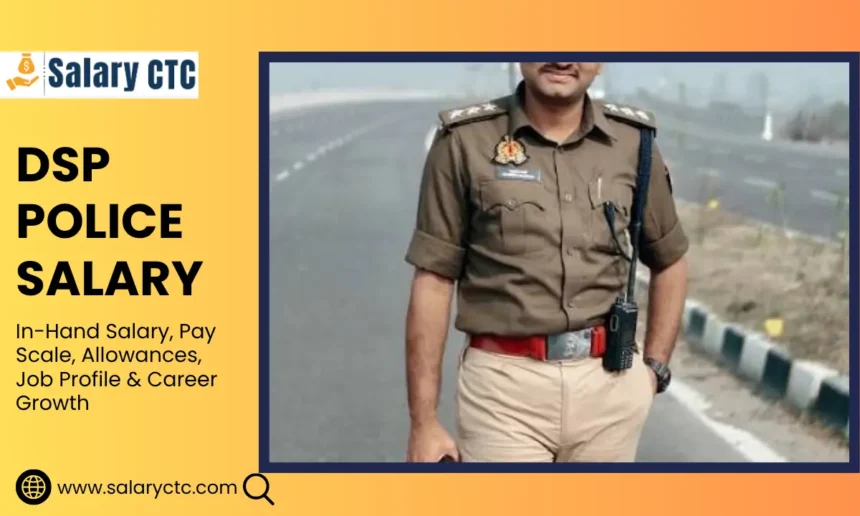
The post of Deputy Superintendent of Police (DSP) is considered as the most prestigious and respected job in the Indian police system. A DSP is a Gazetted Officer who manages law and order, oversees police stations, solves crimes, and ensures public safety. The post has high authority, social status, and lucrative pay package. Annually, thousands of people undergo rigorous preparation for PSC exam or departmental promotion in order to become DSPs. One of the most frequent queries that comes to their mind is: “What is DSP Police Salary?”
Well, the exact pay of a DSP depends on the state of posting, pay grade, allowances, and service period. But after 7th Pay Commission, the salary package of DSPs becomes quite lucrative.
This detailed guide breakdwn everything about the DSP Police Salary structure, including in-hand salary, pay scale, allowances, benefits, promotions, career growth and much more.
Who Is a DSP (Deputy Superintendent of Police)?
DSP is a Class-I Gazetted Officer who oversees the functioning of the police in the area of his jurisdiction i.e., subdivision or district.
Major Responsibilities
- Maintaining law and order
- Supervising police stations
- Investigating serious crimes
- Managing police personnel
- Conducting raids and operations
- Ensuring public safety
- Coordinating with district administration
The role involves of administration as well as field duties.
DSP Police Salary Structure (Updated)
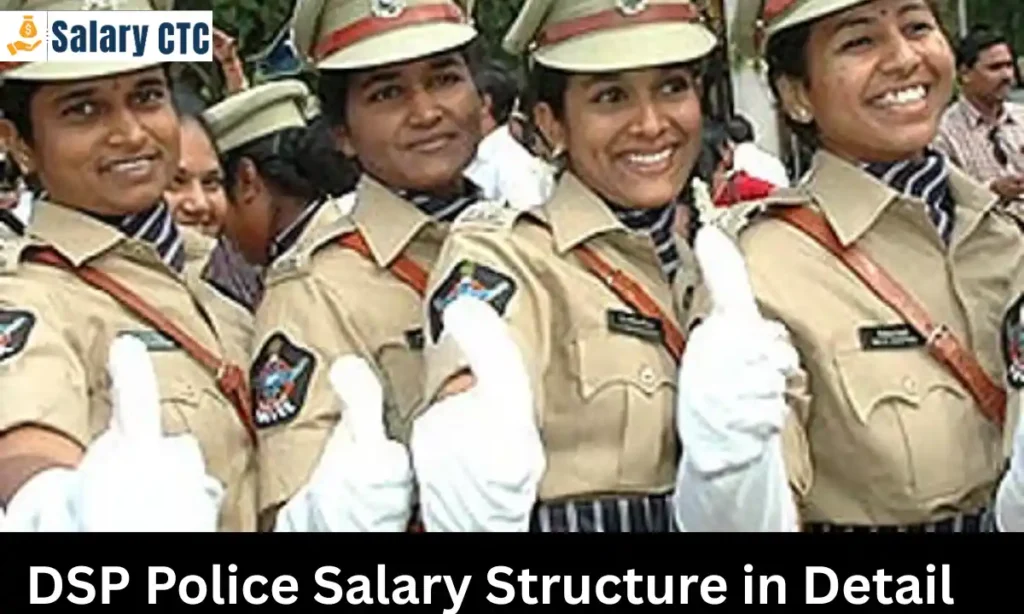
With respect to the 7th Pay Commission, most of the DSP officials come under:
Pay Level
- Level 10
Basic Pay
- ₹56,100 Per Month
The salary goes up by increments and promotions every year.
DSP Police In-Hand Salary
Taking into account all allowances and after deduction of NPS contribution and taxes, the approximate salary per month would be:
₹75,000 – ₹1,00,000 Per Month
The exact amount depends on:
- State government rules
- Posting location
- HRA category
- Special allowances
DSP Police Salary Breakdown
| Component | Approximate Amount |
|---|---|
| Basic Pay | ₹56,100 |
| Dearness Allowance (DA) | ₹15,000 – ₹20,000 |
| House Rent Allowance (HRA) | ₹6,000 – ₹18,000 |
| Transport Allowance | ₹3,000 – ₹7,000 |
| Other Allowances | Variable |
Gross Monthly Salary
- ₹90,000 – ₹1.2 Lakh
Approximate In-Hand Salary
- ₹75,000 – ₹1 Lakh
Allowances Provided to DSP Officers
Other than basic salary, DSP officials also get many allowances.
Dearness Allowance (DA)
Given to cover the impact of inflation.
House Rent Allowance (HRA)
Varies according to the posting city.
Travel Allowance
To meet transportation costs.
Uniform Allowance
For official uniform maintenance.
Special Duty Allowances
Depending upon the policies of the respective state.
These allowances significantly increase total earnings.
Perks and Benefits of a DSP
Several government facilities are provided by this position.
Major Benefits
Government accommodation
- Official vehicle
- Medical facilities
- Pension benefits
- Paid leave
- Security staff (in some states)
- Telephone and fuel allowances
- Social prestige
These benefits makes the post very attractive.
DSP Job Profile
The duty of a DSP is to coordinate the police administration and ensure that public order is maintained.
Key Responsibilities
- Crime prevention
- Supervising investigations
- Managing police personnel
- Handling emergencies
- Intelligence gathering
- Coordinating with senior officers
Duty involves leadership, courage, and administration.
Working Environment
DSP officers work in:
Common Places
- Police headquarters
- District offices
- Crime investigation units
- Field operations
- Law and order divisions
It job involves both office and fieldwork.
Working Hours
The police officers don’t operate on normal office hours.
Nature of Duty
- Emergency duties
- Night operations
- Public events
- Disaster management
- Long working hours during critical situations
The post requires dedication and discipline.
Promotion Hierarchy of DSP
There are good prospects for promotion in this post.
Career Progression
- Deputy Superintendent of Police (DSP)
- Additional Superintendent of Police (ASP)
- Superintendent of Police (SP)
- Senior Superintendent of Police (SSP)
- Deputy Inspector General (DIG)
- Inspector General (IG)
- Additional Director General (ADG)
- Director General of Police (DGP)
Promotions depend on:
- Experience
- Performance
- Seniority
- Departmental evaluations
Salary After Promotion
| Rank | Approximate In-Hand Salary |
|---|---|
| DSP | ₹75k – ₹1L |
| ASP | ₹90k – ₹1.2L |
| SP | ₹1L – ₹1.5L |
| DIG | ₹1.5L – ₹2L |
| IG | ₹2L – ₹2.3L |
| DGP | ₹2.5L+ |
Higher positions bring greater responsibilities and benefits.
How to Become a DSP?
Candidates can become DSP through:
State PSC Examinations
Conducted by respective state public service commissions.
Departmental Promotion
Experienced Inspectors may get promoted to DSP.
UPSC Civil Services Examination
IPS officers are appointed to higher police positions and may hold equivalent responsibilities.
Educational Qualification Required
Most states require:
Eligibility
- Graduation from a recognized university
- Age criteria as prescribed
- Physical fitness standards
Selection processes vary by state.
Skills Required to Become a Successful DSP
Successful police officers generally possess:
- Leadership skills
- Decision-making ability
- Physical fitness
- Communication skills
- Courage and integrity
- Crisis management capability
These qualities are essential for effective law enforcement.
Why DSP Is One of the Most Respected Jobs
The post offers:
Major Advantages
- Attractive salary
- Government facilities
- Job security
- Social prestige
- Leadership responsibilities
- Promotion opportunities
- Opportunity to serve society
These factors make DSP one of the most sought-after government positions.
Challenges of Being a DSP
Like every law enforcement profession, the role comes with challenges.
Common Challenges
- High-pressure situations
- Long working hours
- Emergency responsibilities
- Law and order management
- Risk to personal safety
Despite these challenges, the profession remains highly rewarding.
DSP Salary in Different States
Although the basic pay remains similar under the 7th Pay Commission, allowances may differ slightly among states.
Approximate in-hand salary generally ranges between:
₹75,000 – ₹1 Lakh Per Month
depending on posting and state policies.
Future Scope and Career Growth
With promotions, a DSP can rise to:
- SP
- DIG
- IG
- ADG
- DGP
Senior officers enjoy higher salaries, greater authority, and enhanced facilities.
Frequently Asked Questions (FAQ)
The basic pay starts at approximately ₹56,100 per month under Pay Level 10.
The approximate monthly in-hand salary ranges between ₹75,000 and ₹1 lakh.
Yes, official vehicles and related facilities are generally provided.
Yes, a Deputy Superintendent of Police is a Class-I Gazetted Officer.
Yes, through promotions and years of service, a DSP can eventually reach the position of Director General of Police.
Conclusion
The DSP Police Salary offers a combination of financial stability, social prestige, and career growth. With an in-hand salary ranging from ₹75,000 to ₹1 lakh per month, along with allowances, official facilities, and promotion opportunities, the position remains one of the most prestigious careers in Indian law enforcement.
Beyond the salary and benefits, a DSP carries the responsibility of maintaining law and order and ensuring public safety. For aspirants seeking authority, respect, and an opportunity to serve society, becoming a Deputy Superintendent of Police is undoubtedly one of the finest career choices in India.
Also, Read: Anganwadi Karyakarta Salary | Major Rishabh Singh Sambyal Salary | 4200 Grade Pay Salary | Lab Assistant Salary | CISF SI Salary | Sudhir Chaudhary Salary | Jana Nayagan Vijay Salary