

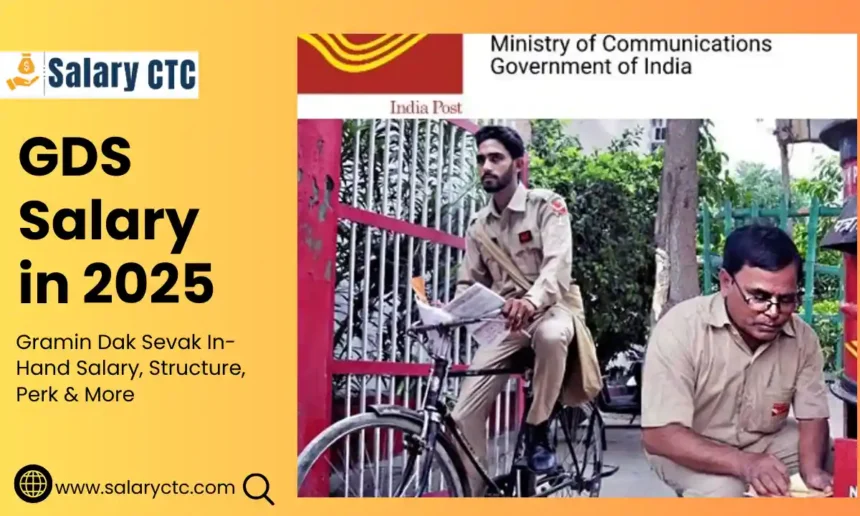
The Gramin Dak Sevak (GDS) recruitment process of India Post is one of the most popular government job opportunities in rural areas of India. The posts of Branch Postmaster (BPM), Assistant Branch Postmaster (ABPM), and Dak Sevak attract thousands of applicants every year due to low qualification requirements, stable income, and work-life balance. One of the most searched questions among aspirants is GDS salary, in-hand amount, job nature, and growth benefits.
This comprehensive article provides the compelete salary structure of GDS employees in 2025 with a easy-to-understand explanation.
What is GDS?
GDS stands for Gramin Dak Sevak. This category of employees works under the India Post (Department of Posts, Ministry of Communications, Government of India).
There are three main roles under GDS:
- BPM (Branch Postmaster)
- ABPM (Assistant Branch Postmaster)
- Dak Sevak
GDS Salary Structure (2025 Updated)
GDS salary is known as Time-Related Continuity Allowance (TRCA). The Salary may varies according to working hours and branch category.
There are generally two working hours categories:
- 4 hours (minimum)
- 5 hours
1. BPM Salary (Branch Postmaster)
| Category | TRCA (Approx. Monthly) |
|---|---|
| 4 Hours BPM | ₹12,000 – ₹14,500 |
| 5 Hours BPM | ₹14,000 – ₹18,000 |
2. ABPM Salary (Assistant Branch Postmaster)
| Category | TRCA (Approx. Monthly) |
|---|---|
| 4 Hours ABPM | ₹10,000 – ₹12,000 |
| 5 Hours ABPM | ₹12,000 – ₹14,500 |
3. Dak Sevak Salary
| Category | TRCA (Approx. Monthly) |
|---|---|
| 4 Hours Dak Sevak | ₹9,500 – ₹11,500 |
| 5 Hours Dak Sevak | ₹11,500 – ₹14,000 |
Note: The salary of GSD person may vary slightly based on state, circle, and government revision.
GDS In-Hand Salary (Monthly)
The in-hand salary after deductions such as NPS.
- ₹9,000 – ₹17,000 per month
GDS Allowances and Benefits
GDS employees receive various allowances apart from TRCA.
Office Maintenance Allowance (for BPM)
Provided for:
- Rent of branch office
- Electricity bill
- Stationery expenses
Fuel Allowance / Travel Allowance (for delivery job)
Especially for rural delivery duties.
NPS (National Pension Scheme)
Government contributes to pension account monthly.
Paid Leaves
- Casual leave
- Maternity leave (for female GDS)
- Paternity leave (limited)
Financial Support Schemes
- Medical assistance
- Group insurance
- GDS welfare fund
GDS Working Hours
- Minimum 4 hours
- Maximum 5 hours
Unlike regular postal employees, GDS are not full-time government employees and follow fixed short working hours.
GDS Job Profile (Duties)
BPM (Branch Postmaster) Duties
- Manage branch post office
- Open & close office daily
- Handle postal transactions
- Manage savings bank accounts
- Maintain cash book & records
ABPM Duties
- Sorting mail
- Assisting BPM with work
- Customer interaction
- Payment collection
Dak Sevak Duties
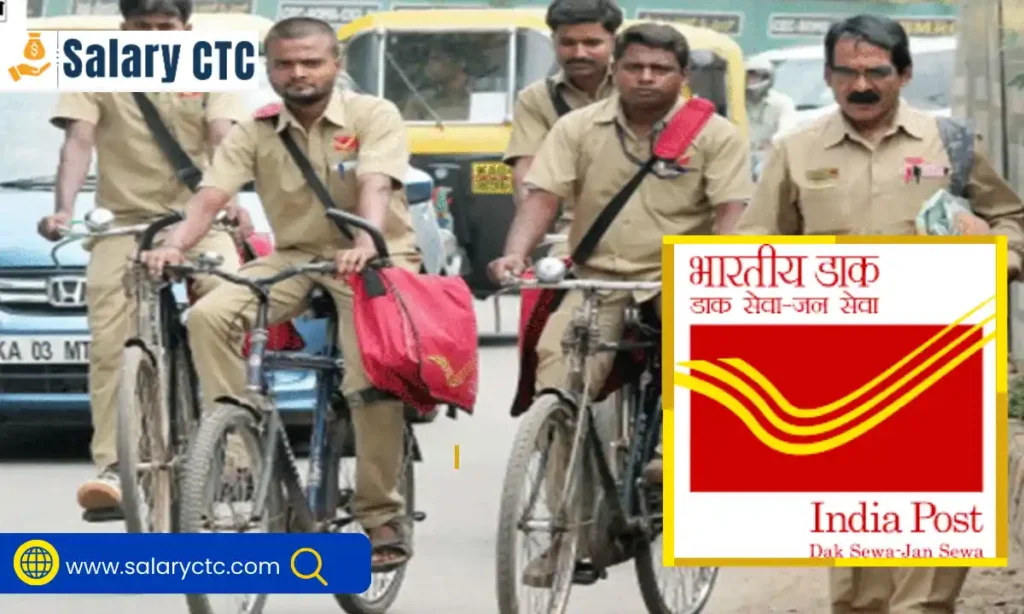
- Delivering mails and parcels
- Collecting postal charges
- Promoting postal schemes
GDS Promotion & Career Growth
Even though GDS is a non-regular post, there are opportunities for promotion.
GDS Promotion Possibilities
- Postal Assistant
- Sorting Assistant
- Postman
- MTS
- Multi-Tasking Staff
Promotions depend on departmental tests, vacancies, and performance.
Pros and Cons of GDS Job
Advantages
- Job security
- Easy eligibility
- Work-life balance
- Less workload
- Posting in home district
Disadvantages
- Lower salary compared to regular postal jobs
- Limited allowances
- No DA, HRA like central staff
GDS Salary vs Post Office Salary (Comparison)
| Post | Monthly Salary |
|---|---|
| GDS | ₹10,000 – ₹18,000 |
| Postman | ₹25,000 – ₹45,000 |
| Postal Assistant | ₹30,000 – ₹55,000 |
| Sorting Assistant | ₹28,000 – ₹50,000 |
Conclusion: The GDS salary is lower and easier to get and have flexible working hours.
State-Wise GDS Salary Chart (Approx. Monthly In-Hand)
| State / UT | BPM Salary | ABPM Salary | Dak Sevak Salary |
|---|---|---|---|
| Bihar | ₹12,000 – ₹18,000 | ₹10,000 – ₹13,000 | ₹9,500 – ₹12,000 |
| Uttar Pradesh | ₹12,500 – ₹18,000 | ₹10,300 – ₹13,200 | ₹9,500 – ₹12,000 |
| Jharkhand | ₹12,000 – ₹17,500 | ₹10,000 – ₹12,500 | ₹9,500 – ₹11,800 |
| Rajasthan | ₹12,000 – ₹18,000 | ₹10,200 – ₹13,000 | ₹9,600 – ₹12,200 |
| Madhya Pradesh | ₹12,000 – ₹17,800 | ₹10,200 – ₹12,700 | ₹9,500 – ₹12,000 |
| Chhattisgarh | ₹11,800 – ₹17,200 | ₹10,000 – ₹12,400 | ₹9,500 – ₹11,800 |
| Gujarat | ₹12,500 – ₹18,000 | ₹10,500 – ₹13,200 | ₹9,800 – ₹12,500 |
| Maharashtra | ₹12,500 – ₹18,500 | ₹10,500 – ₹13,400 | ₹10,000 – ₹12,800 |
| Karnataka | ₹12,500 – ₹18,000 | ₹10,500 – ₹13,200 | ₹10,000 – ₹12,800 |
| Tamil Nadu | ₹12,500 – ₹18,500 | ₹10,500 – ₹13,500 | ₹10,000 – ₹13,000 |
| Kerala | ₹12,800 – ₹18,700 | ₹10,700 – ₹13,500 | ₹10,200 – ₹13,000 |
| Telangana | ₹12,300 – ₹18,000 | ₹10,200 – ₹13,000 | ₹9,800 – ₹12,400 |
| Andhra Pradesh | ₹12,400 – ₹18,200 | ₹10,300 – ₹13,200 | ₹9,900 – ₹12,700 |
| Odisha | ₹12,000 – ₹17,600 | ₹10,000 – ₹12,600 | ₹9,600 – ₹12,100 |
| West Bengal | ₹12,500 – ₹18,500 | ₹10,500 – ₹13,500 | ₹10,000 – ₹13,000 |
| Assam | ₹12,000 – ₹17,800 | ₹10,000 – ₹12,800 | ₹9,500 – ₹12,200 |
| Punjab | ₹12,800 – ₹18,500 | ₹10,600 – ₹13,400 | ₹10,000 – ₹13,000 |
| Haryana | ₹12,800 – ₹18,800 | ₹10,700 – ₹13,500 | ₹10,200 – ₹13,200 |
| Himachal Pradesh | ₹12,300 – ₹17,900 | ₹10,300 – ₹12,800 | ₹9,700 – ₹12,300 |
| Uttarakhand | ₹12,400 – ₹17,800 | ₹10,400 – ₹12,800 | ₹9,800 – ₹12,200 |
| J&K | ₹12,000 – ₹17,800 | ₹10,000 – ₹12,700 | ₹9,600 – ₹12,300 |
| Delhi (HQ Circle) | ₹13,000 – ₹19,000 | ₹10,800 – ₹13,800 | ₹10,200 – ₹13,500 |
| Chandigarh | ₹13,000 – ₹18,800 | ₹10,800 – ₹13,600 | ₹10,300 – ₹13,300 |
| Meghalaya | ₹11,800 – ₹17,300 | ₹10,000 – ₹12,300 | ₹9,500 – ₹11,800 |
| Manipur | ₹12,000 – ₹17,500 | ₹10,100 – ₹12,500 | ₹9,700 – ₹12,000 |
| Tripura | ₹11,900 – ₹17,200 | ₹10,000 – ₹12,300 | ₹9,500 – ₹11,900 |
| Nagaland | ₹12,000 – ₹17,500 | ₹10,100 – ₹12,400 | ₹9,700 – ₹12,200 |
| Mizoram | ₹12,000 – ₹17,600 | ₹10,200 – ₹12,600 | ₹9,800 – ₹12,300 |
| Arunachal Pradesh | ₹12,100 – ₹17,700 | ₹10,200 – ₹12,700 | ₹9,800 – ₹12,200 |
Conclusion
Understanding GDS salary helps government job aspirants. So, they can decide before applying for BPM, ABPM, or Dak Sevak posts. Although the salary is a bit low, Gramin Dak Sevak job offers stable income, flexible working hours and local placement in rural areas. But with promotion opportunities through departmental exams, a GDS job holder can have a long-term career in the postal department.
GDS Salary Frequently Asked Questions (FAQ)
A BPM earns approximately ₹12,000 to ₹18,000 per month depending on working hours.
Average in-hand GDS salary ranges between ₹9,000 to ₹17,000 per month.
No. GDS is a non-regular departmental post but comes with job stability.
Yes, through NPS (National Pension Scheme) contributions.
Yes, they get casual leave, maternity leave, and welfare benefits.
Yes, through internal departmental promotion exams.
No, DA/HRA is not provided like regular central government employees.
Working hours are 4 to 5 hours per day.
Minimum qualification is 10th pass (with knowledge of computer and local language).
Yes, most posts are rural-based, often close to home location.
Also, Read: BPSC Teacher Salary| GST Inspector Salary | SDM Salary