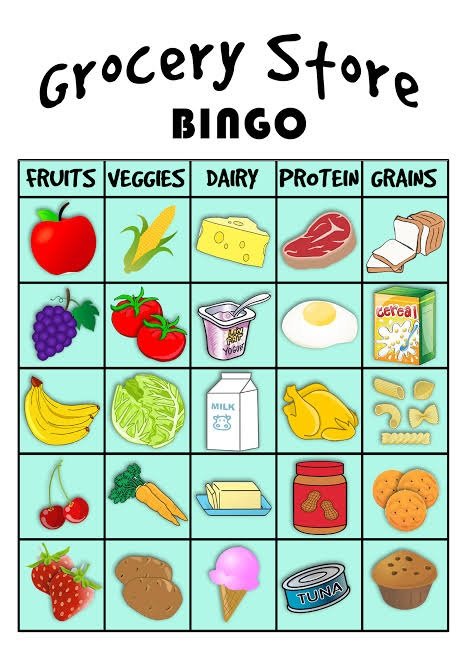
Before you lay a hand upon that shopping trolley, cast your gaze upon the receipt from your previous excursion. Now, lift your eyes to the shelf. That oblong box of grain-based breakfast cereal? That foil-wrapped satchel of salted crisps? That tempered-glass jar of tomato-based pasta condiment? You are no longer merely conducting a routine provision run. You have unwittingly enlisted in a psychological endurance trial.
Welcome to the most stressful, involuntary and bizarrely addictive pastime of 2026: The Inflation Guessing Game, otherwise known as Grocery Bingo.
Here’s how it works. You pick an item, guess the price, and then brace yourself for the gut-punch of reality. It’s not fun. It’s a psychological thriller where the villain is paper-thin profit margins, and the hero is your rapidly shrinking wallet. But here is the twist: we are playing it wrong. We think it’s about math. It’s about psychology, memory, and the slow erosion of our perceived value of a dollar. Let’s break down the madness.
The Rules of the Bet: Why We Can’t Stop Playing
You are intimately acquainted with the sequence. You encounter a vacuum-sealed bag of roasted Arabica beans. Your mental ledger recalls an expenditure of $8.99 from a half-year prior. You wager internally: “It will likely register at $10.99 now.” You grasp the package. $13.49. You are defeated. The shock isn’t just the number; it’s the violation of your internal database. Your brain is screaming, “That’s a 50% increase!” while the store politely suggests you “pay or leave.”
This is the core mechanic of the Grocery Bingo Bet. It’s a game of comparative value where the rules change every week. We are essentially betting against the memory of our former selves. And in these cases, we are losing spectacularly. It isn’t like when you place regular bets on your favourite sports on this site, a contrast to the favourite pastime that ultimately never disappoints when you invest your time and energy into it.
The “Shrinkflation” Blindside
Precisely at the moment you perceive mastery over the game, the supermarket alters the playing field. You observe a bag of crisps. Its price remains unchanged from the preceding week. You mentally celebrate! You have triumphed! You deposit it into your cart with palpable satisfaction.
But exercise closer scrutiny. The packaging is vertically elongated. It is more slender. It imparts the tactile sensation of a partially deflated balloon. You inspect the net weight. Historically, it contained 340 grams. Now, it registers a measly 280 grams. The price itself did not ascend, yet the substantive quantity has contracted. You did not lose the price estimation; you were outmaneuvered in the volume department.
The Psychology of the Receipt (It’s Not About the Money)
Why does this hurt so much? It’s not just the cash leaving your account. It’s the concept of reference points. We build our lives around anchors of value. A coffee costs five bucks. A gallon of milk costs four. These anchors are the bedrock of our financial sanity. When they get ripped out, we feel unmoored. We are left floating in a sea of sticker shock, desperately trying to build new anchors, only to have the tides rise again next month.
We also exhibit an addictive dependency upon the dopamine hit of precise predictions. When you encounter an item that has miraculously retained its former price, it delivers a neurochemical jolt. It feels akin to discovering forgotten currency in the recess of an overcoat. You feel compelled to announce this anomaly to the cashier. “Observe! The peanut butter remains at $4.99! I am victorious!” The retail entity is acutely cognizant of this behavioural tic. They depend upon the “loss leader” (that economical rotisserie poultry) to entice you into their domain, ensuring you suffer large deficits across the rest of your basket. You may win the tactical skirmish, but they secure the strategic campaign.